How To Choose The Right Harness For Your Dog
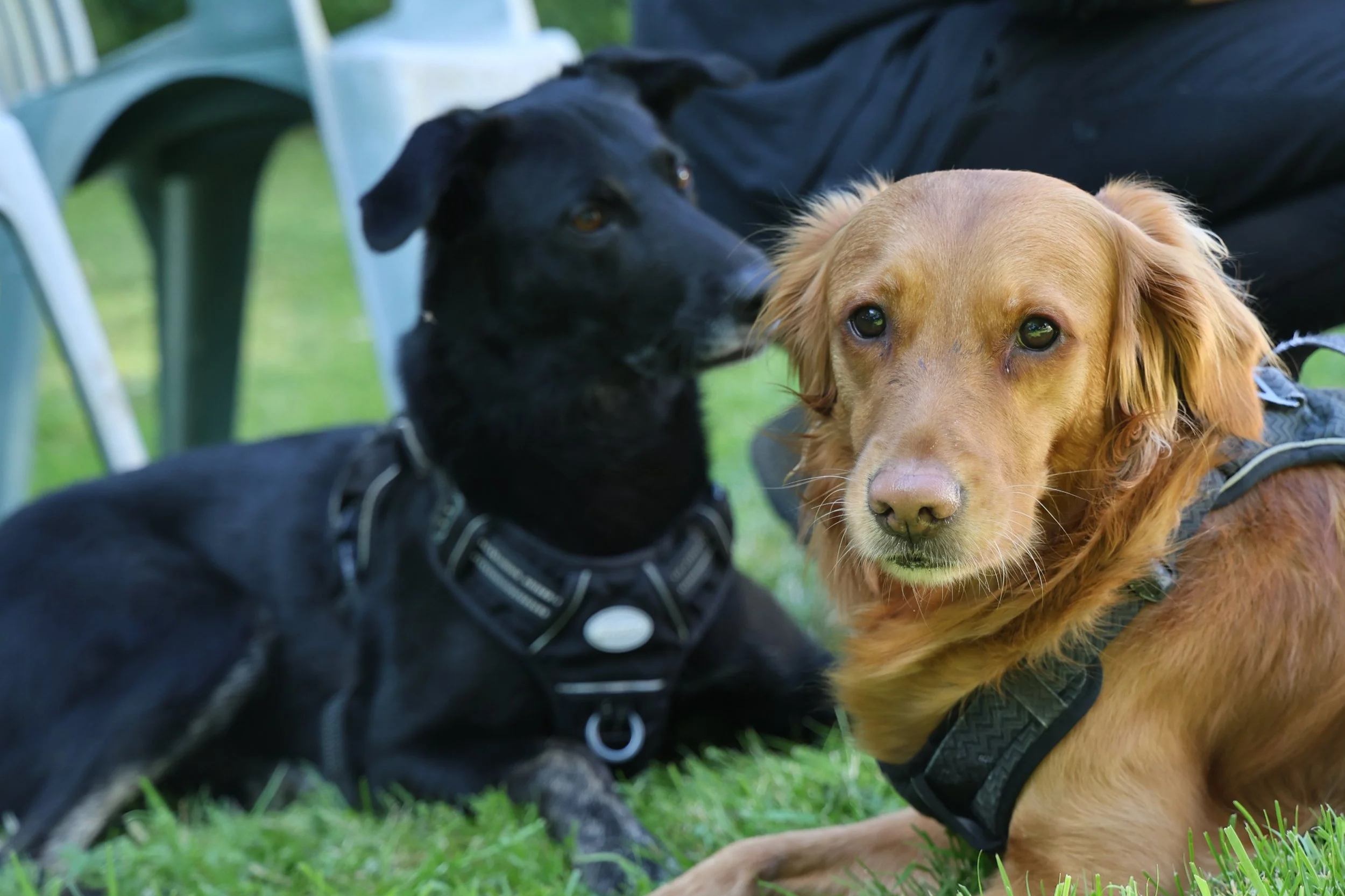
When I brought home my first dog, I didn’t put much thought into his harness other than what looked cool. So you can imagine my shock when q harness that was fitted well and was the right size, slid off him in the middle of a car park. Thankfully, being the well trained boy that he is, he didn’t go anywhere and nothing happened, but I immediately regretted not doing more research into harnesses.
Now cut to 8 years later, I know significantly more about dogs and what I wish I’d known at the time, was that the choosing the right harness is soooo much more than what looks good and fits on your dog. Because it’s not just safety we have to worry about. The wrong harness can impact your training AND damage your dog’s health in the long run, whereas a good dog harness will give you security, peace of mind and you’ll only ever need one.
In this article, I’m going to cover everything you need to know in order to choose the right harness for your pup!
Please note that some of these recommendations may contain affiliate links, so purchasing through them helps to support my business!
Why I Don’t Recommend Just Any “Popular” Dog Harness
I’ve noticed lately that my Instagram feed is flooded with cutesy harnesses and brands encouraging you to buy a harness in every design or colour they have. Now I know this might seem cute, but when it comes to a safety tool that we use every day - one that can affect our dog’s health, training and safety, we need to put functionality over social media trends.
On top of that, so many of these products will end up in landfill, especially given they’re not actually made to survive the outside world. It’s easy to fall into the pattern of over-consumption, but we as a society cannot sustain the amount we’re consuming and pet products like this, made out of polyester and plastic are a huge issue.
We also have to consider our dog’s health. Many harnesses on the market are just designed with aesthetics in mind, but an ill fitting harness, or the wrong shaped harness, can actually cause a lot of damage to your dog’s joints over time.
I’m a huge advocate for purchasing with intention, not just jumping on the latest fashion trends, so I’m going to break down exactly what you should look for when choosing a harness.
Why a Y-Front Harness Matters for Your Dog’s Health
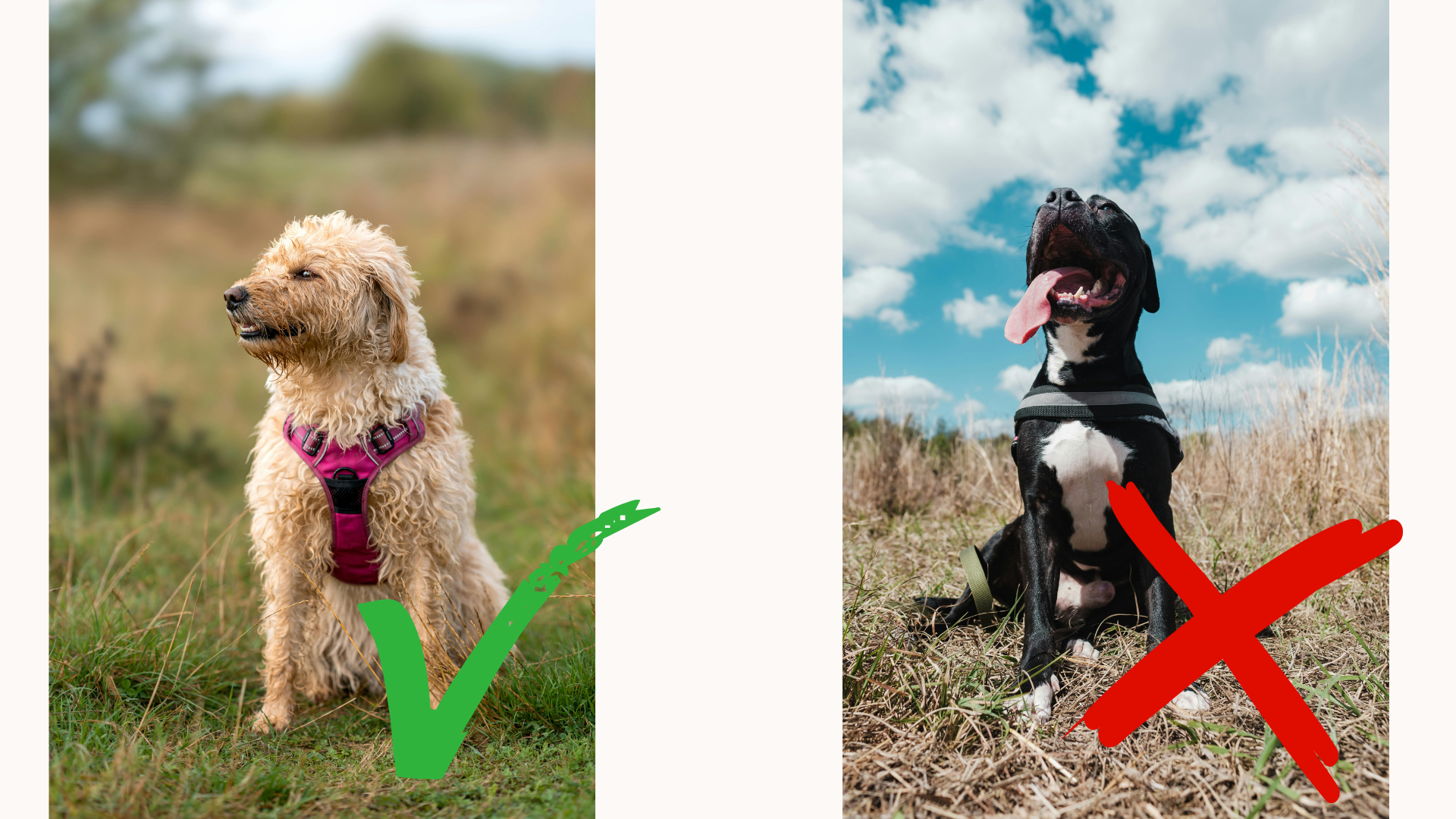
You’ll see in the image on the left that the harness sits in y shape around the dogs shoulders. This is actually way more important in a harness than you’d think. It allows for free movement of the legs and shoulders, which reduces the likelihood of long term damage to the joints. Harnesses that go across the shoulders, like the one on the right can limit free movement and cause damage in the long term.
It’s also a lot more comfortable for dogs that pull, lunge or put any kind of pressure into the harness and it reduces the chances of them slipping out of the harness. I’ve seen dogs (including my own) back out of harnesses like the one on the right.
Fitting: Choosing For Confidence
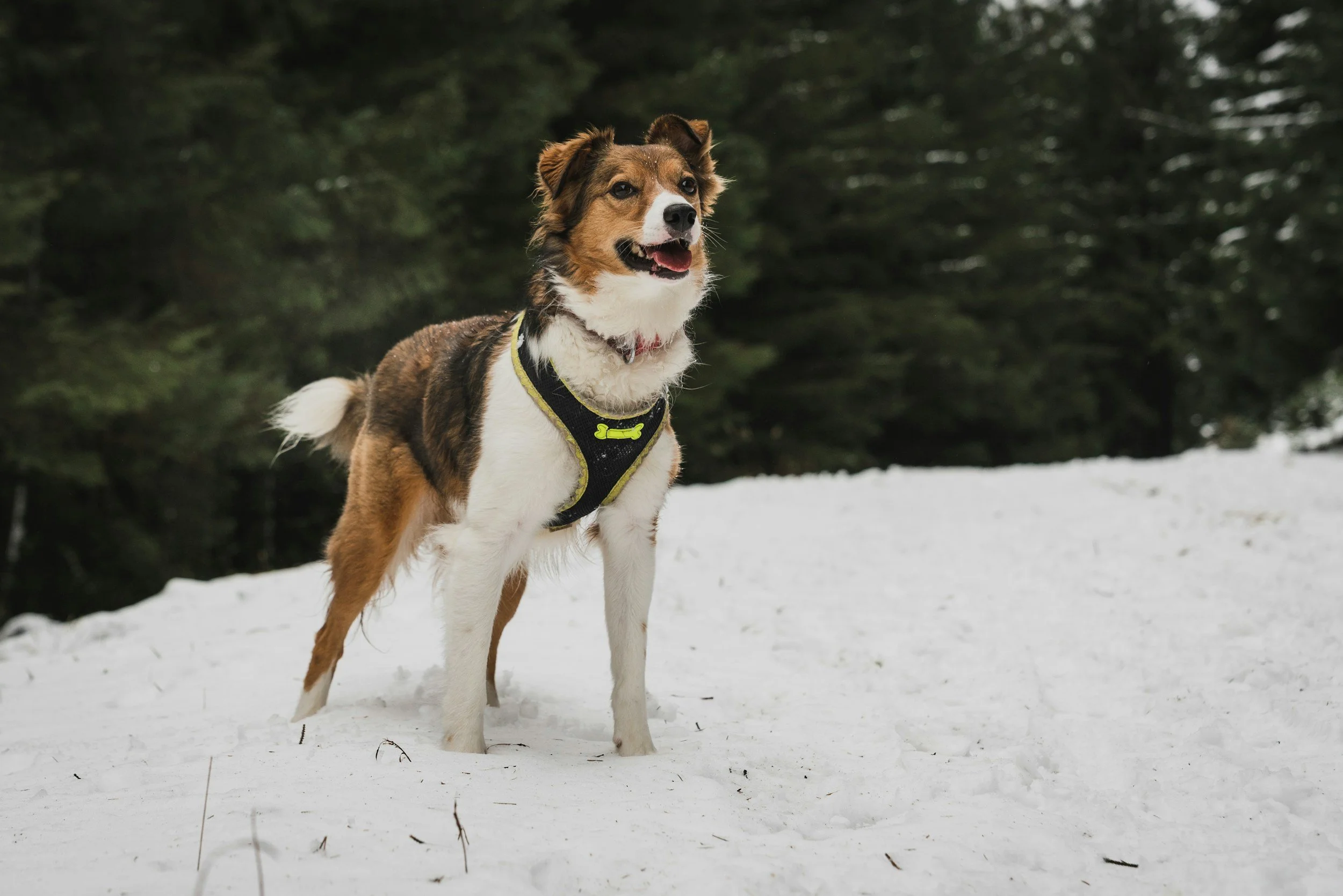
I always prefer a harness that goes on over the dogs head - as opposed to one they have to step into or be picked up and put into. I see so many dogs who are afraid of their harness and it’s actually really easy to teach a dog to love putting their own head in the harness.
It’s worth noting that there will always be exceptions so choose what works for your dog!
The more choice the dog has and the less handling they need to get the harness on the better.
Sturdy Harnesses Last Longer and Save You Money
I actually really hate harnesses that feel like a thin bit of fabric. You most often find these sold as cute accessories rather than practical harnesses for walking (don’t get me started on over-consumption in the pet industry), so they often don’t last very long and don’t fit quite right.
I always look for thick well made harnesses, with some padding for comfort, because buying a great one once, is so much better than constantly replacing your cheap harnesses.
Handles Are A Must Have For Safety
I love love love a harness with a handle. Not only is it super helpful for things like reactivity management, it’s also really handy for safety. I often use mine when I’m waiting near roads, holding my dog to the side and when we’re passing another dog with not much room. This has definitely come a non-nogitaible for me in recent years!
A Front and Back Ring Is Always The Best Option For Strong Dogs
As someone that mostly handles huge dogs that like to pull, I love the option of a front ring on my harnesses. It’s a safe way to give you more control and not end up flat on your face, but also does not compromise the dogs wellbeing like head collars and figure of 8 leads would. If you have a super puller, or even a dog that just decides they have to follow a smell right now, a front ring is a great option for a harness.
My Top Recommendations
Taking all of this into account, here are the harnesses I absolutely swear by!
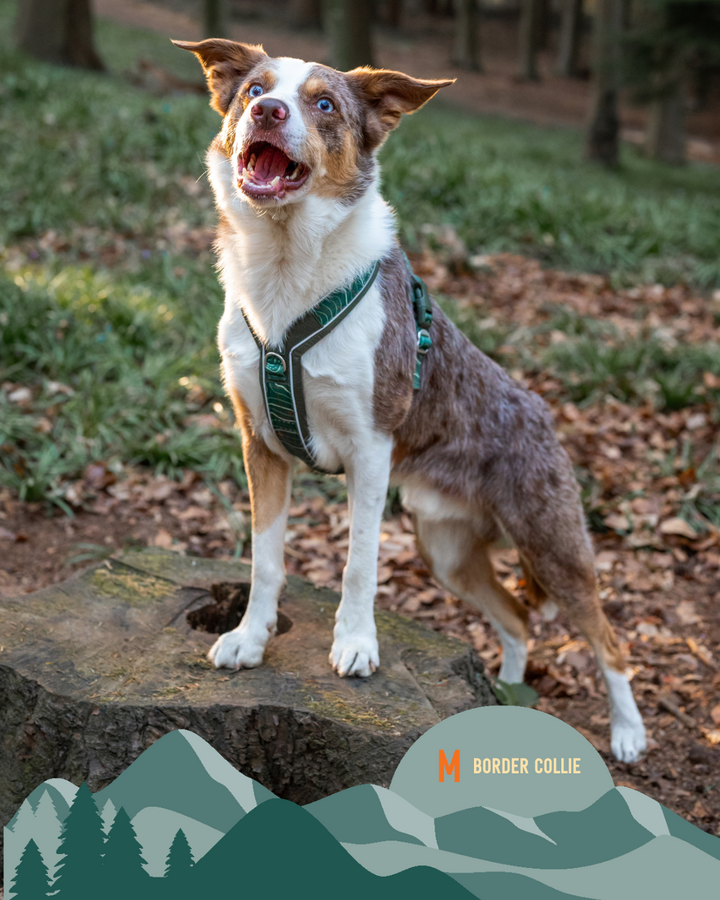
This harness really ticks all the boxes for me. I use this with both of my Shepherd breed dogs as it’s sturdy enough to take their weight, fits comfortably, has a front ring for extra safety AND has a handle. I also really like that the material is soft and padded so it doesn’t damage their hair and skin.
This harness is an amazing all rounder for pretty much any dog regardless of behavioural concern!
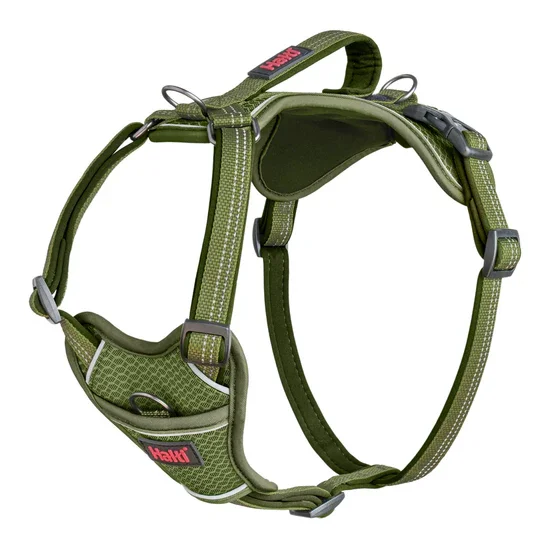
This is my go to for my Golden Retriever who joins me for a lot of city walks, cafe outings and overall we navigate much busier spaces. I like this harness a lot for those tighter situations as the handle quickly velcros down and back up again for more control than just a fabric handle would.
I also love how sturdy this harness is and I’d recommend it for anyone navigating city life and anyone who’s dealing with reactivity. I also really like the lead that pairs with it!
Harness FAQs
-
The short answer is yes!
Harness allow for freedom of movement while also keeping your dog safe. We don’t want to be putting pressure on sensitive parts of the dog’s body, especially the neck and throat area as this can cause a lot of damage.
We especially don’t want things that tighten or pull the dog’s head around.
-
Harnesses are not designed to stop pulling and we don’t want them too.
If we are changing behaviour through the presence of a physical tool, we are relying on discomfort to train our dogs.
This can cause so many problems in the long run. Remember that if we want to change behaviour, we should teach our dogs what we want them TO do. Check out my 30 Day Loose Lead course if you’re not sure on how to do this. It’s available via My Training Hub
-
Front ring harnesses are designed to give you more control for the purpose of safety. They do not in themselves stop pulling.
This should be used as a management and safety tool only, with the view to teach your dog to walk nicely. It’s not good to rely on the front ring permanently and ideally should just be a back up.
Check out my 30 Day Loose Lead Course if you need help on stopping pulling - it’s available in My Training Hub
Remember that choosing the right harness for your dog should not be an after thought. We all want to prioritise our dog’s health, wellbeing and safety, so I hope this helps you to navigate the crazy world of dog products, just a little better!
Remember that if you need help with training, you can access my entire library, plus get support from me in my Training Hub.